
Bathroom Renovation Handled Through Every Phase
Bathroom remodeling in Evansville for homeowners dealing with outdated layouts, failing tile, or fixture and plumbing conditions that require coordinated trade work
After a bathroom remodel is complete, the surfaces that define the room—tile walls, flooring, fixture trim, and cabinetry—should carry consistent tolerances from one plane to the next with no visible evidence of the rough-in work underneath. That outcome depends on how the framing, plumbing, and electrical rough-ins are handled before any finish surface goes in, because every decision made at the substrate level shows up in the finished room. Hirsch Contracting LLC delivers bathroom remodeling in Evansville with a team of seven salaried employees, led by an owner with fifteen years of contracting experience and crew members ranging from two to twenty years in the trade.
The process begins with framing directly from the project layout. All plumbing and electrical rough-ins are completed to code before any tile substrate or finish surface is installed. Tile, fixtures, and finished surfaces are then installed per plan in sequence. Clients select finishes during the estimate phase so that material delivery and site access are coordinated before work starts—a step that prevents the mid-project delays that occur when finish selections are deferred until after demo is complete. Material warranties, including lifetime coverage on fixtures where applicable, are included in the quoted scope, and a one-year craftsman warranty covers labor.
Request a free estimate to review your current bathroom layout and identify the scope of framing, rough-in, and finish work your project requires.
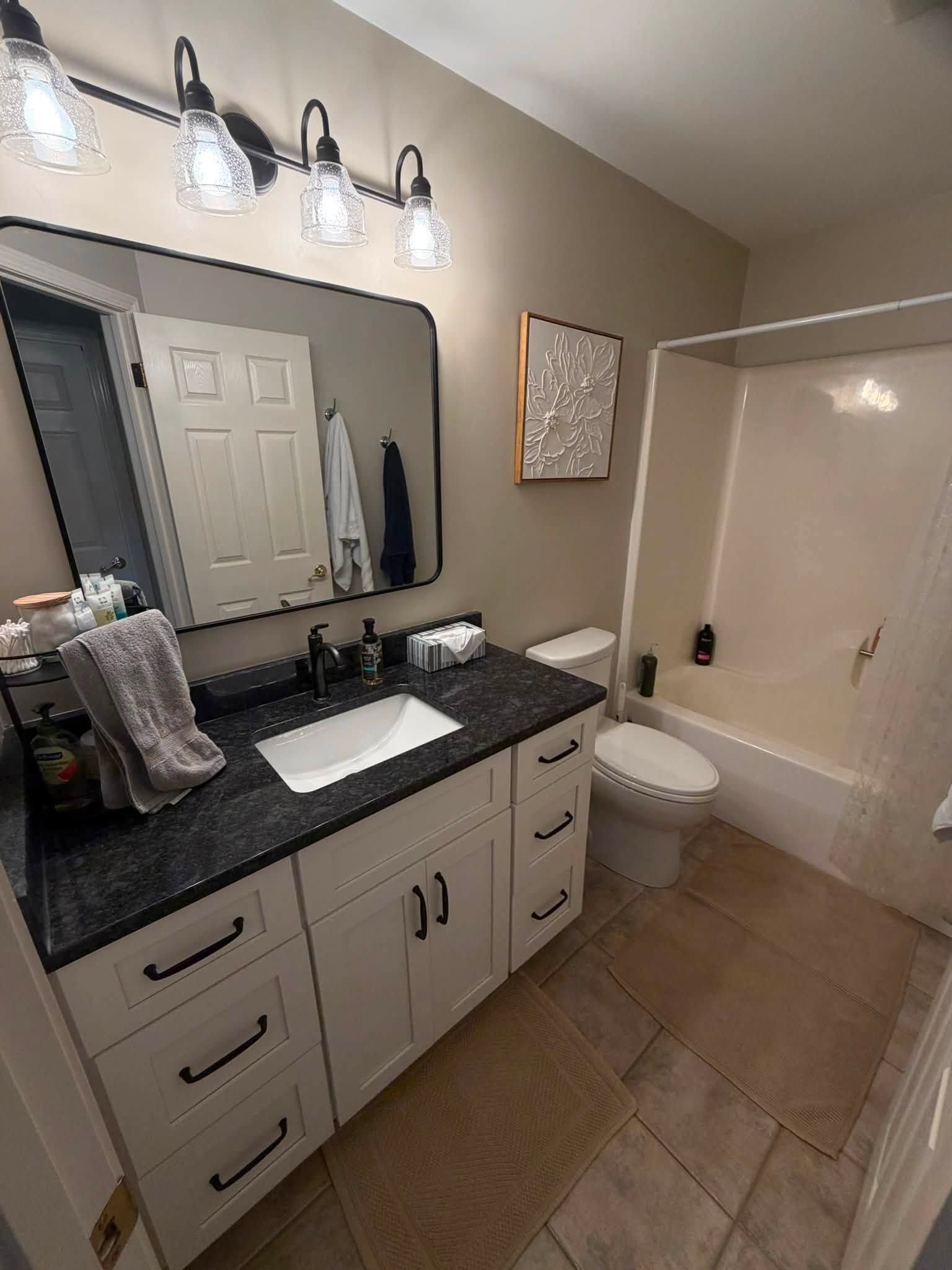
What the Bathroom Remodeling Process Actually Accomplishes
Bathroom remodeling requires coordinating plumbing, electrical, tile, and finish carpentry in a compressed space where each trade's work constrains the next. Plumbing rough-ins must be set to the correct height and horizontal position before backer board or tile substrate is installed, because relocating a drain after substrate is in place means reopening the floor. Electrical circuits serving GFCI outlets and exhaust fans must be roughed in and inspected before walls are closed. Hirsch Contracting LLC manages this sequencing internally with a stable crew rather than relying on separate subcontractor schedules that introduce coordination gaps between phases.
Once finish work is complete, the observable result is tile that is plumb on vertical surfaces and level on horizontal planes, grout joints that are consistent in width across the full installation, fixtures that are centered on their designated locations, and trim that lands flush at wall transitions. A bathroom that is finished to these standards does not require the heavy caulk application at corners and transitions that is used to cover substrate and layout errors—tight corners and consistent joints are the direct product of correct substrate preparation before tile is set.
The estimate process at Hirsch Contracting LLC includes finish selection so that the project scope is fully defined before work begins—no allowances for materials to be determined later and no placeholder pricing that changes once selections are made. Licensed and insured status and the included material and labor warranties mean the completed work is backed by documentation that satisfies both inspection and homeowner expectations through the post-project period.
Questions Before Starting Your Bathroom Project
The questions below address how bathroom remodeling is performed, what the process involves at each phase, and what the finished work should look like in a correctly completed project.
What happens during the framing and rough-in phase before tile installation begins?
The crew sets or adjusts wall framing to accommodate the planned layout, then installs plumbing supply and drain rough-ins and electrical circuits to code. These are inspected before any substrate or finish surface is applied, because the inspection requires exposed framing and rough-in work to be visible.
How is tile set on shower walls to stay plumb when framing is not perfectly straight?
A plumb reference line is established using a level before any tile is placed, and the installer works from that reference rather than from the framing face. Out-of-plumb framing is addressed with substrate shimming or back-buttering variation before setting begins, so that the tile surface reads plumb regardless of what the framing behind it does.
Why does finish selection need to happen before the project starts rather than during construction?
Material lead times for tile, fixtures, and cabinetry vary, and if selections are deferred until after demo, the project waits on delivery rather than on labor. Selecting finishes at the estimate stage allows materials to be ordered and on site before the crew mobilizes, keeping the project on the planned sequence.
What does correctly finished bathroom tile work look like when inspected after completion?
Grout joints are consistent in width across the full field, corner transitions are tight without heavy caulk fill covering misalignment, tile faces are coplanar across the installation with no individual tiles proud of or recessed from the field, and the grout surface is sealed uniformly with no ungrouted joints.
How does the age of homes in Evansville affect bathroom remodeling scope?
Many homes in the area were built during periods when plumbing vent configurations and drain locations were set to standards that differ from current code, which means relocating a fixture often requires adding a vent run or adjusting the drain slope in addition to the fixture work itself. Identifying those conditions during the estimate prevents scope additions after demo reveals what is behind the existing walls.
Hirsch Contracting LLC also performs
bathroom remodeling in Boonville, Chandler, Evansville, Haubstadt, and Rockport. To start planning your bathroom project with a crew that handles every phase from rough-in to finish, request a free estimate and bring your fixture and tile preferences so the scope can be fully defined from the first visit.